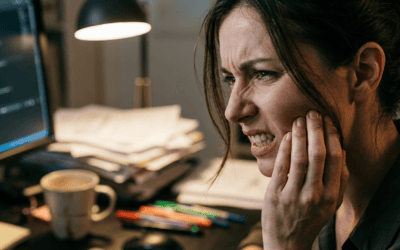
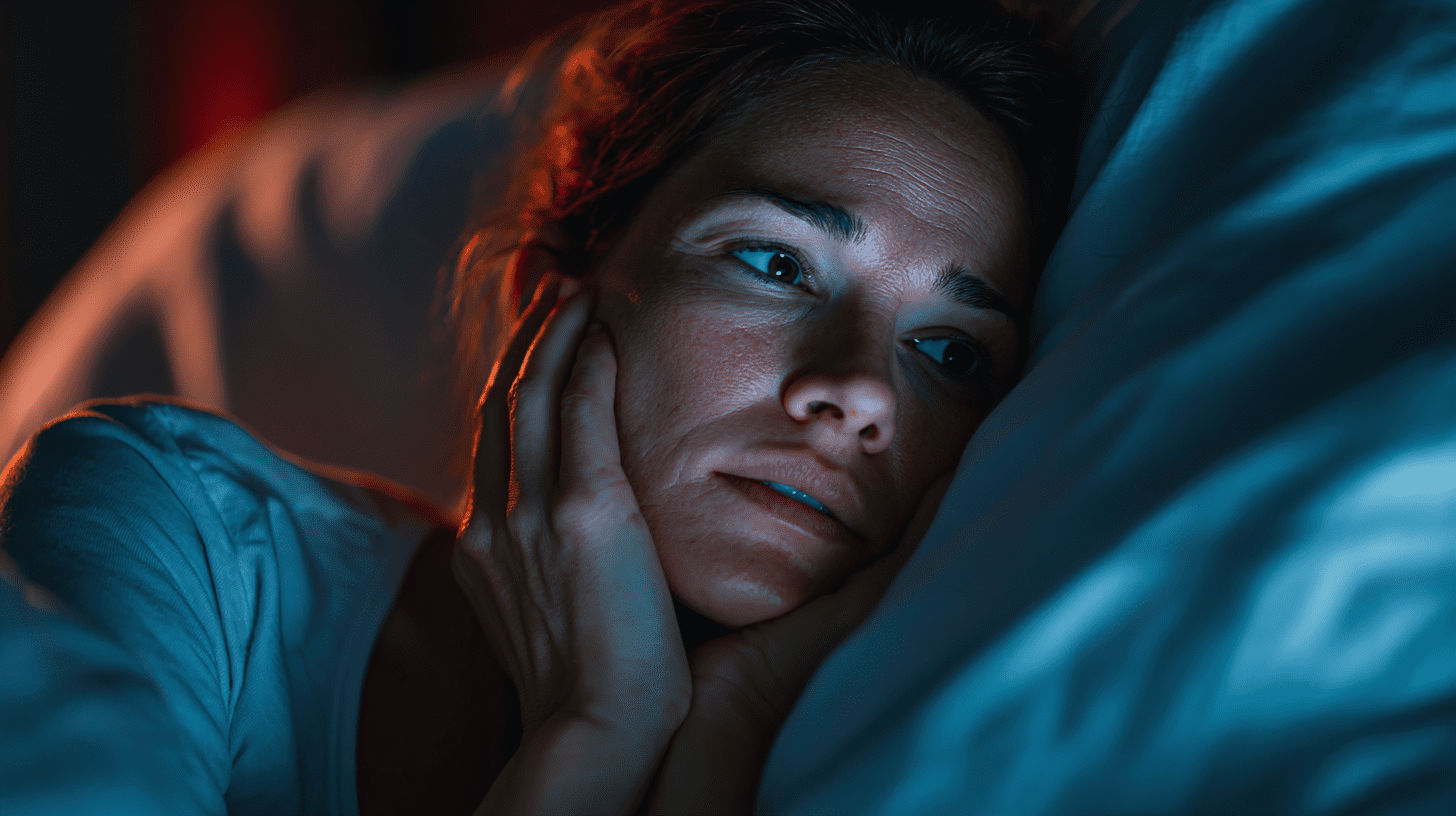
When your jaw decides to voice its complaints at 2 a.m., you’re not alone in losing precious sleep. TMJ dysfunction affects millions, creating a frustrating cycle where nighttime clenching intensifies pain and poor rest makes symptoms worse. Understanding the connection between your jaw, spine, and sleep quality can change everything. What you might not realize is how far outside your jaw this problem actually reaches.
Key Takeaways
- TMJ dysfunction causes jaw pain, headaches, and facial tension that disrupts sleep quality and prevents deep, restorative rest.
- Nighttime symptoms worsen due to stress-induced muscle contractions, sleep apnea, certain medications, and poor sleeping positions.
- Spinal misalignments, particularly in the cervical spine, create tension patterns that directly intensify TMJ pain and dysfunction.
- Chiropractic care addresses TMJ-related sleep problems through spinal adjustments, craniosacral therapy, and customized jaw-strengthening exercises.
- Sleep posture recommendations from chiropractors help minimize jaw strain and reduce nighttime TMJ symptoms for better rest.
What Is TMJ Dysfunction and How Does It Affect Your Sleep?
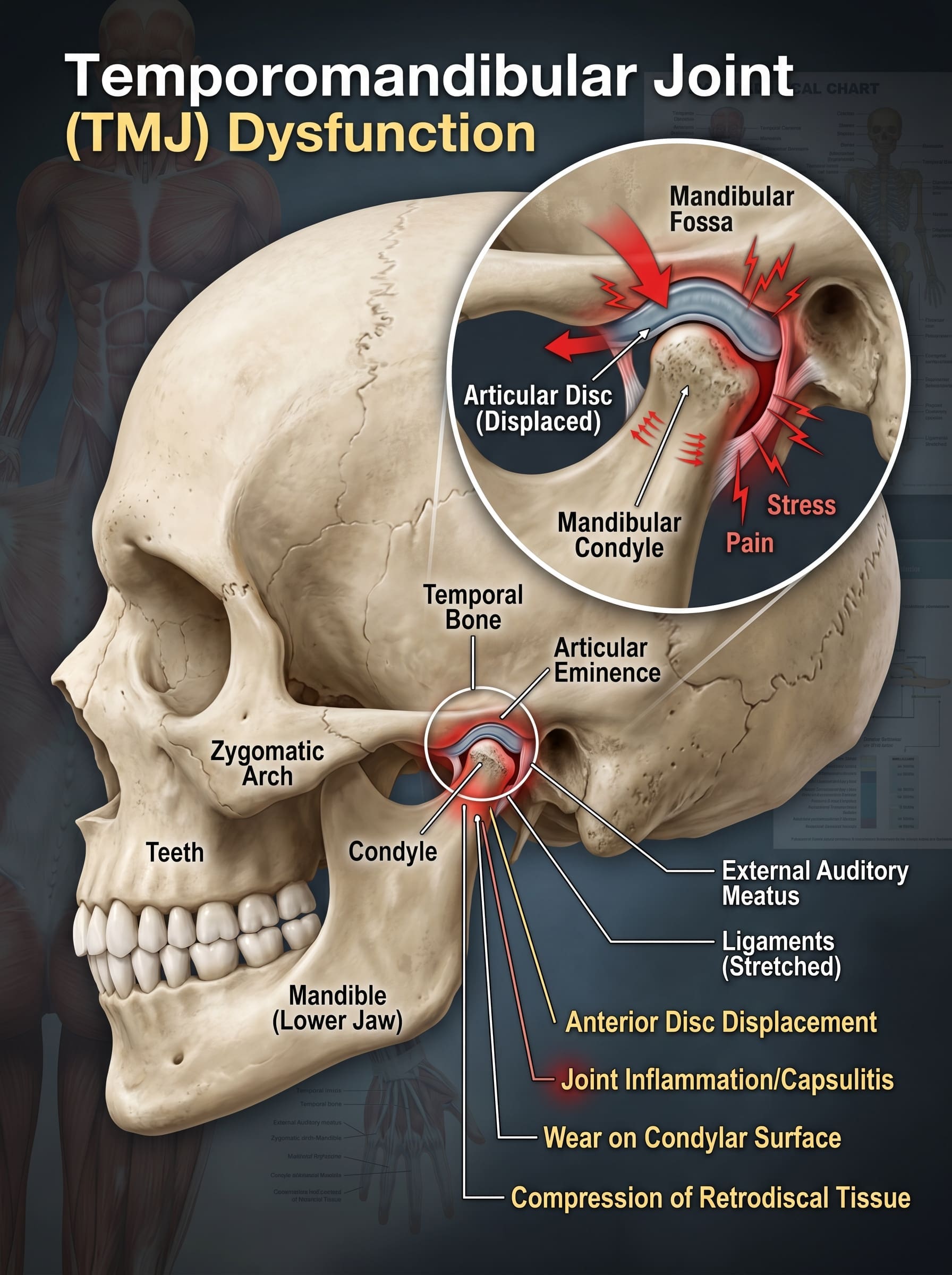
TMJ dysfunction, a condition affecting the temporomandibular joint that connects your jaw to your skull, can transform your nights into restless struggles. You may experience jaw pain, headaches, and facial muscle tension that make finding a comfortable sleeping position nearly impossible.
When you wake with morning jaw soreness, hear clicking sounds, or struggle to open your mouth, your TMJ is likely disrupting your sleep quality. This dysfunction can even contribute to sleep apnea, causing breathing interruptions throughout the night.
The chronic pain prevents you from achieving deep, restorative sleep, leaving you fatigued and struggling to concentrate during the day. Seeking professional treatment addresses these symptoms directly, helping restore your sleep quality and reducing persistent jaw pain that’s been keeping you awake.
Common Signs That TMJ Pain Is Disrupting Your Rest
How can you tell if your jaw is sabotaging your sleep? Several common signs point to TMJ pain as the culprit behind your restless nights.
You may notice morning jaw pain characterized by stiffness and soreness when you wake. This typically results from clenching or grinding your teeth throughout the night. Frequent headaches concentrated around your temples or forehead often accompany this discomfort.
Listen for clicking or popping sounds when you open or close your mouth; these indicate joint dysfunction. Check your teeth for unusual wear patterns or chips, particularly on your molars, which suggest nighttime bruxism. Furthermore, unexplained earaches or pressure sensations near your ears can signal that TMJ dysfunction is compromising your sleep quality.
Recognizing these symptoms early helps you seek appropriate treatment.
Why Jaw Clenching and Grinding Worsen at Night

Understanding these warning signs is the first step, but knowing why your symptoms intensify during sleep hours helps you address the problem more effectively.
During sleep, your body processes accumulated stress, often manifesting as unconscious jaw clenching and nighttime grinding. This bruxism occurs because your brain’s protective mechanisms relax, allowing tension to manifest physically in your jaw muscles.
Several factors contribute to worsened symptoms at night:
- Unprocessed stress and anxiety trigger involuntary muscle contractions while you’re unconscious
- Sleep disturbances like sleep apnea cause reflexive jaw clenching as your body attempts to reopen blocked airways
- Certain medications, especially antidepressants, increase the likelihood of bruxism as a side effect
- Poor sleep positioning, particularly stomach sleeping, strains your jaw joint throughout the night
Identifying your specific triggers allows for targeted treatment approaches.
The Connection Between Spinal Alignment and Jaw Health
While many patients focus solely on their jaw when experiencing TMJ dysfunction, the relationship between your spine and jaw health plays a critical role in both symptom development and treatment outcomes.
Your cervical spine directly influences the nerves and muscles controlling your temporomandibular joint. When spinal misalignments occur, they can create tension patterns that radiate into your jaw, worsening TMJ dysfunction symptoms. Research indicates that individuals with spinal issues frequently report increased jaw pain due to this musculoskeletal interconnection.
At Elevated Chiropractic Broomfield, we address these underlying spinal alignment problems to restore proper jaw function. Cervical adjustments can improve jaw mobility and reduce muscle tension throughout the region. By maintaining spinal health through regular chiropractic care, you may prevent TMJ-related issues from worsening while supporting better sleep quality.
How Chiropractic Care Addresses TMJ-Related Sleep Problems

When TMJ dysfunction interferes with your sleep, chiropractic care in Broomfield offers targeted solutions that address both the joint mechanics and the muscular components contributing to nighttime discomfort. Your chiropractor evaluates jaw alignment, cervical spine positioning, and muscle tension patterns to develop a thorough treatment approach.
Specific interventions that improve sleep quality include:
- Gentle spinal adjustments that restore proper nerve communication to the jaw muscles
- Craniosacral therapy techniques that release tension in facial and cranial structures
- Customized exercises that strengthen supportive muscles around your temporomandibular joint
- Sleep posture recommendations that minimize jaw strain throughout the night
Practical Tips for Managing Nighttime Jaw Pain
 Apart from professional chiropractic interventions, you can take several evidence-based steps at home to minimize jaw discomfort during sleep. Start by practicing relaxation techniques like deep breathing or directed meditation before bed to reduce stress-induced nighttime muscle tension in your jaw.
Position yourself on your back using a supportive pillow that maintains proper head, neck, and jaw alignment. This reduces strain on your temporomandibular joint throughout the night. You should also avoid hard or chewy foods in the evening to prevent muscle fatigue.
Incorporate gentle jaw exercises, including slow openings and side-to-side movements, to improve mobility. Furthermore, schedule regular dental evaluations to detect bruxism and jaw pain early, enabling timely intervention before symptoms worsen and further disrupt your sleep quality.
Frequently Asked Questions
Why Does My Jaw Hurt so Bad at Night?
Your jaw likely hurts at night due to bruxism, unconscious teeth grinding, or clenching while you sleep. Stress, anxiety, or bite misalignment can trigger this, causing muscle tension and strain on your temporomandibular joint.
What Is the 3 Finger Test for TMJ?
Like Goldilocks testing what’s “just right,” the 3 Finger Test measures your jaw’s range of motion. You’ll stack three fingers vertically and attempt to fit them between your open teeth. Difficulty indicates possible TMJ dysfunction.
Should I Go to the ER for Severe Jaw Pain?
Yes, you should go to the ER for severe jaw pain, especially if it’s sudden, follows an injury, or accompanies chest pain, shortness of breath, swelling, fever, or difficulty swallowing. These symptoms require immediate medical evaluation.
Conclusion
You don’t have to accept sleepless nights as your new normal. Research shows that up to 70% of TMJ patients report significant sleep disturbances, but chiropractic care can help break this cycle. By addressing the root causes of your jaw dysfunction through proper alignment and targeted treatment, you’ll give your body the chance to heal and finally enjoy the restorative sleep you deserve.
At Elevated Chiropractic Broomfield, we specialize in treating TMJ pain and dysfunction, and we’ve successfully helped numerous patients in our community find relief. Each treatment plan is tailored to your specific needs and symptoms.