

Key Takeaways
- Emotional and physical stress triggers jaw muscle tension, leading to teeth grinding (bruxism) and creating a self-perpetuating pain cycle.
- Warning signs include frequent headaches, worn teeth, jaw clicking or popping sounds, and pain around ears, temples, and neck.
- Mindfulness meditation, deep breathing exercises, and regular physical activity effectively reduce stress and decrease bruxism episodes.
- Custom-fit nightguards protect teeth from grinding damage while promoting proper jaw alignment during sleep.
- Professional evaluation combining dental assessment, physical therapy, and cognitive behavioral therapy addresses both physical and psychological roots of TMJ disorders.
Understanding the Stress-TMJ Connection

When you’re under pressure, your body often responds in ways you might not immediately notice, and your jaw is no exception. Emotional and physical stress triggers muscle tension throughout your body, often causing you to clench your jaw or grind your teeth, a condition called bruxism.
This creates a vicious cycle: stress causes jaw tension, which leads to pain, which then increases your stress levels. Furthermore, chronic stress affects your posture, potentially misaligning your jaw and worsening TMJ symptoms.
For those experiencing teeth grinding and jaw pain in Broomfield, understanding this connection empowers you to seek the right kind of help. By recognizing that stress directly contributes to TMJ disorders, you can look beyond quick fixes and toward more extensive treatment approaches. Addressing the underlying stress, not just the physical symptoms, is crucial for breaking this cycle and restoring comfortable jaw function. At Elevated Chiropractic and Functional Medicine, Dr. Joshua Fearn evaluates not only the jaw itself but also the cervical spine and posture to identify stress-related mechanical contributors to your pain.
Recognizing the Warning Signs of Teeth Grinding and Jaw Pain
Identifying stress as a root cause of TMJ problems represents only the first step; you must also recognize the physical warning signs that teeth grinding and jaw dysfunction produce. Common indicators include frequent headaches, jaw pain, and worn-down teeth that suggest ongoing bruxism. You may notice clicking or popping sounds when opening or closing your mouth, signaling potential TMJ involvement.
Pay attention to pain radiating around your ears, temples, and neck, as these symptoms often accompany teeth grinding. Difficulty fully opening your mouth or experiencing a locked jaw indicates advancing TMJ dysfunction requiring prompt attention. Furthermore, increased tooth sensitivity or changes in bite alignment warrant professional evaluation.
If you notice these signs and you live in Broomfield, don’t ignore them; persistent teeth grinding and jaw pain in Broomfield residents is a common pattern Dr. Fearn sees at Elevated Chiropractic and Functional Medicine. Early recognition of these warning signs enables timely intervention, helping you break the destructive TMJ cycle before complications worsen.
How Chronic Stress Fuels the TMJ Cycle

Although you may not immediately connect your daily stress levels to jaw discomfort, chronic stress directly fuels the TMJ cycle through a predictable physiological pathway. When you experience prolonged stress, your body responds with increased muscle tension, particularly in the jaw muscles. This tension triggers teeth grinding, often without your awareness.
The resulting stress-pain cycle becomes self-perpetuating: chronic stress causes clenching, which generates pain, which creates additional stress and further muscle tension. Poor posture associated with stress compounds the problem by disrupting jaw alignment.
Additionally, stress-related sleep disruption heightens your pain sensitivity and maintains heightened muscle tension. Understanding this connection empowers you to address both psychological and physical factors simultaneously, helping you break the cycle and provide better care for those you serve.
Effective Strategies to Break the Stress-Grinding-Pain Loop
Breaking free from the stress-grinding-pain loop requires a multi-faceted approach that targets both mind and body. You’ll find that mindfulness meditation and deep breathing exercises effectively reduce stress and anxiety, relieving the muscle tension that drives teeth grinding and TMJ pain.
Regular physical exercise lowers anxiety while improving mood, decreasing bruxism episodes. When you’re experiencing flare-ups, practice jaw awareness and avoid hard or chewy foods to manage symptoms effectively.
Cognitive behavioral therapy addresses the psychological roots of stress and anxiety, helping you develop healthier coping mechanisms that reduce teeth grinding triggers. Furthermore, custom-fit nightguards protect your teeth while promoting proper jaw alignment.
Professional Treatment Options for Lasting TMJ Relief
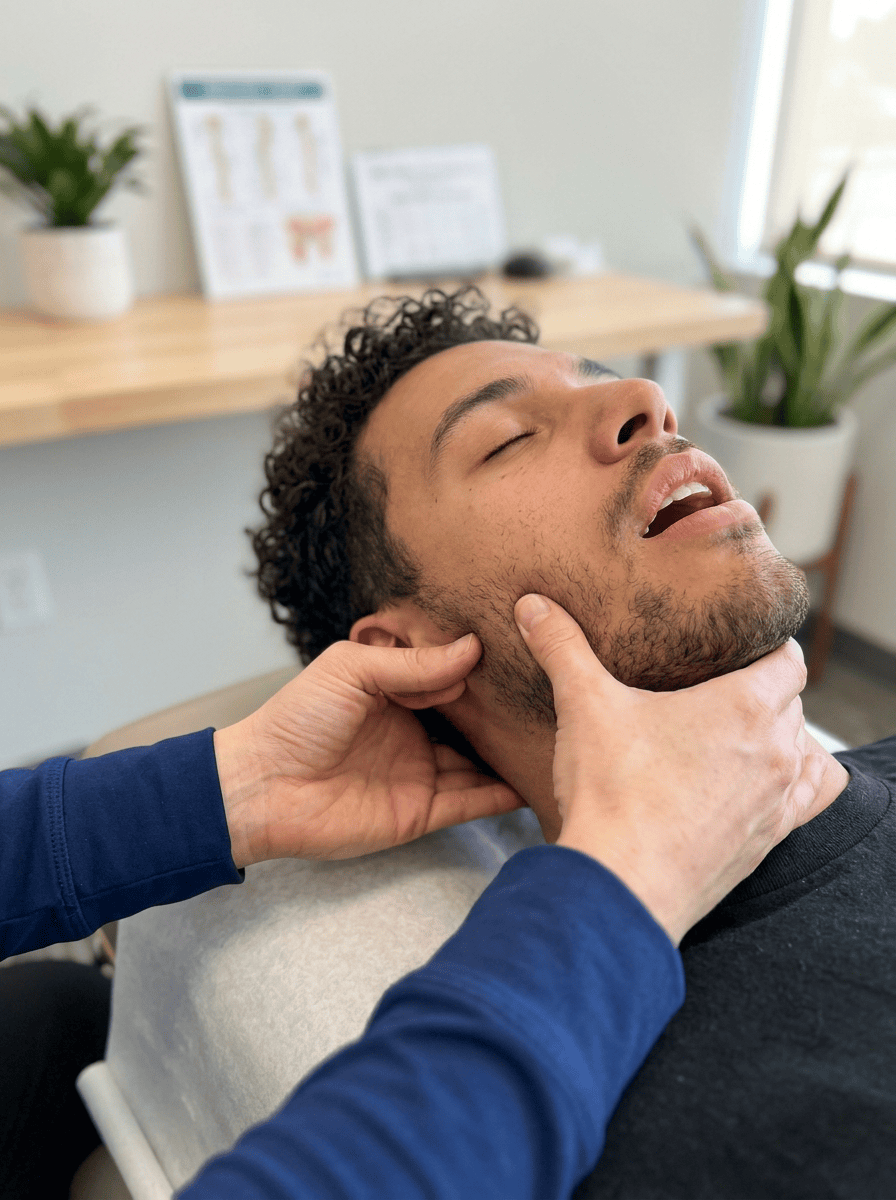
When self-care strategies alone don’t provide adequate relief, seeking professional treatment becomes essential for managing persistent TMJ disorders. A thorough evaluation by a dental specialist assesses your jaw mobility, muscle tension, and posture to develop a targeted treatment plan.
Professional treatment options for lasting relief include:
- Physical therapy: Manual therapy techniques and targeted exercises address muscular dysfunction while improving jaw mechanics.
- Custom nightguards: These protective devices shield your teeth from bruxism damage and realign your jaw to reduce TMJ pressure.
- Stress management interventions: Cognitive behavioral therapy and mindfulness meditation tackle the psychological roots of grinding behaviors.
You’ll achieve favorable outcomes through regular communication with your healthcare providers. This ongoing dialogue allows for treatment adjustments based on symptom changes, ensuring you receive personalized care that delivers lasting relief.
Frequently Asked Questions
How to Stop Clenching Jaw From Stress?
You can stop stress-related jaw clenching by practicing mindfulness techniques like deep breathing, maintaining good posture, exercising regularly, and identifying your stress triggers. Consider consulting a physical therapist for personalized exercises and strategies.
What Medication Is Used for Bruxism?
Medications act as a relief valve for bruxism’s pressure. You’ll find muscle relaxants reduce jaw tension, while SSRIs address underlying anxiety. Botox injections can relax overactive muscles. Always consult your healthcare provider for personalized treatment recommendations.
Does Stress-Related TMJ Go Away?
Yes, stress-related TMJ can improve markedly when you effectively manage your stress. You’ll likely see symptom relief through mindfulness, relaxation techniques, and physical therapy targeting jaw mechanics, especially with early intervention and thorough treatment.
Where Is a Bruxism Headache?
You’ll typically feel a bruxism headache as dull, throbbing pain around your temples, forehead, or back of your head, like a medieval vice tightening. You may also experience accompanying neck stiffness and facial muscle soreness.
Conclusion
As the saying goes, “an ounce of prevention is worth a pound of cure.” You’ve learned how stress drives the grinding-pain cycle and uncovered evidence-based strategies to interrupt it. Whether you’re implementing mindfulness techniques, seeking professional treatment, or using a custom nightguard, you’re taking meaningful steps toward relief.
If you’re facing teeth grinding and jaw pain in Broomfield, you don’t have to tackle this alone. TMJ-focused care at Elevated Chiropractic and Functional Medicine, combined with dental and behavioral support, can help you break the cycle and restore comfortable, confident jaw function. Don’t let TMJ pain control your life; partner with your healthcare providers, including Dr. Joshua Fearn, to develop a personalized treatment plan that addresses your unique needs and the stressors behind your symptoms.